
Ready-to-drink is one of the few genuinely expanding formats in beverage, and sweetener choice does more work in an RTD than in almost any other application. It affects your process steps, your label, your shelf stability, and your cost per case simultaneously.
Agave syrup earns its place in a lot of RTD formulations. Here’s the practical case, and the limits worth knowing before you formulate it.
- It Dissolves Cold — No Heat Step Required
This is the operational headline. Agave syrup dissolves fully into solution in cold systems without heating or extended agitation, which means you can skip a heat-and-cool cycle entirely.
For a cold-fill RTD line, that translates into shorter batch times, lower energy costs, and one less place for a batch to go wrong. Compare that to granulated sugar, which needs dissolution time and often heat, or honey, which is thick, temperature-sensitive, and awkward to handle at volume.
- Higher Sweetness Intensity Means Lower Usage Rates
Agave syrup is roughly 1.4 to 1.6 times sweeter than sucrose. You need less of it to hit the same sweetness target.
That has real downstream effects: fewer grams of sweetener per serving, a smaller contribution to total solids, and more room in your formula for flavor, acid, or functional ingredients. It also supports sugar-reduction work without pushing you toward high-intensity sweeteners that bring their own off-notes.
- Liquid Format Fits Existing Production Lines
If your plant already meters liquid ingredients, agave syrup drops in with no new equipment. It pumps predictably, doses precisely by volume or weight, and disperses evenly through large batches.
For contract manufacturers running multiple SKUs, that repeatability matters more than almost any other ingredient property. Dry sweeteners introduce dust handling, dissolution variability, and clumping risk that liquid formats simply don’t have.
- Clean-Label and Certification Positioning
Consumers scan RTD labels closely, and “organic agave syrup” reads very differently from “high fructose corn syrup” on the same panel.
Agave syrup is available in organic, non-GMO, vegan, and gluten-free certified grades. For brands positioned around plant-based or premium natural credentials, it’s an ingredient that supports the story rather than undermining it and consumer recognition of agave is already high thanks to the tequila category.
- Category Authenticity for Agave-Based Cocktails
If you’re building canned margaritas, palomas, rancheritas, or tequila-based RTDs, agave syrup is the sweetener the category expects. It’s what bartenders reach for, it’s what the cocktail’s origin story implies, and it integrates cleanly with the botanical and citrus notes in those builds.
Using cane sugar in an agave cocktail isn’t wrong, but agave syrup is a defensible marketing detail as well as a functional one.
- Stability Advantages in Cold and Acidic Systems
Agave syrup resists crystallization, which protects mouthfeel and clarity in refrigerated and frozen RTDs. It behaves predictably in low-pH systems — relevant for nearly every citrus-forward or carbonated product — and its liquid consistency reduces sedimentation risk over shelf life.
Grade Selection
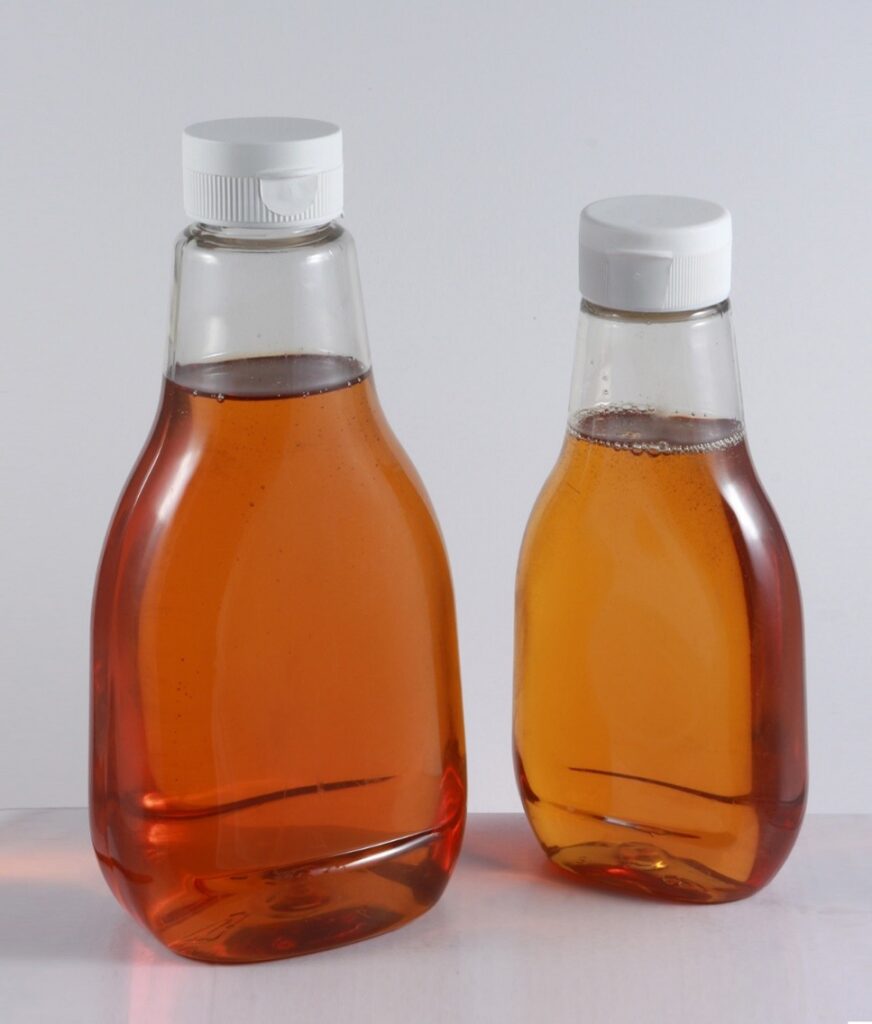
- Light/clear grades — the default for RTDs. Neutral flavor and minimal color contribution, so your flavor system stays in control.
- Amber/dark grades — carry caramel and roasted notes. Useful in coffee RTDs, spiced cocktails, or anywhere you want the sweetener contributing flavor.
Best-Fit RTD Applications
- Canned cocktails and hard seltzers
- Non-alcoholic mocktails and functional beverages
- RTD coffee and tea
- Sports and hydration drinks
- Juice blends and smoothies
What Agave Syrup Won’t Do
Being straight about this protects you from a compliance problem later.
It’s still added sugar. Agave syrup counts toward the added sugars line on the Nutrition Facts panel. It does not help you make a “no added sugar” claim.
“Low glycemic” isn’t an FDA-defined claim. Agave’s glycemic index is genuinely lower than sucrose because of its fructose-dominant profile, but if you build marketing around low-GI or diabetic-friendly positioning, make sure the language is defensible.
It’s not a nutrition ingredient. Trace minerals are present but not in meaningful amounts. Spec it for performance and label positioning, not nutritional claims.
It’s fructose-heavy. Depending on source and processing, fructose content typically runs well above table sugar. That’s what drives the low GI, and it’s also the basis of most nutritional criticism of agave. Know the argument before your brand team meets it.
The Bottom Line
For RTD manufacturers, agave syrup’s value is mostly operational: it dissolves cold, sweetens harder so you use less, meters cleanly on lines you already have, and holds up in acidic, refrigerated systems. The clean-label positioning is a genuine bonus, and in agave-based cocktails it’s close to the obvious choice. Just spec it with clear eyes about what it is — a well-behaved liquid sweetener, not a health ingredient.
How To Find Agave Syrup
When agave syrup is best suited for your RTD beverage formulation, contact The Tierra Group. Agave syrup and other ingredients are in stock and ready to ship.