
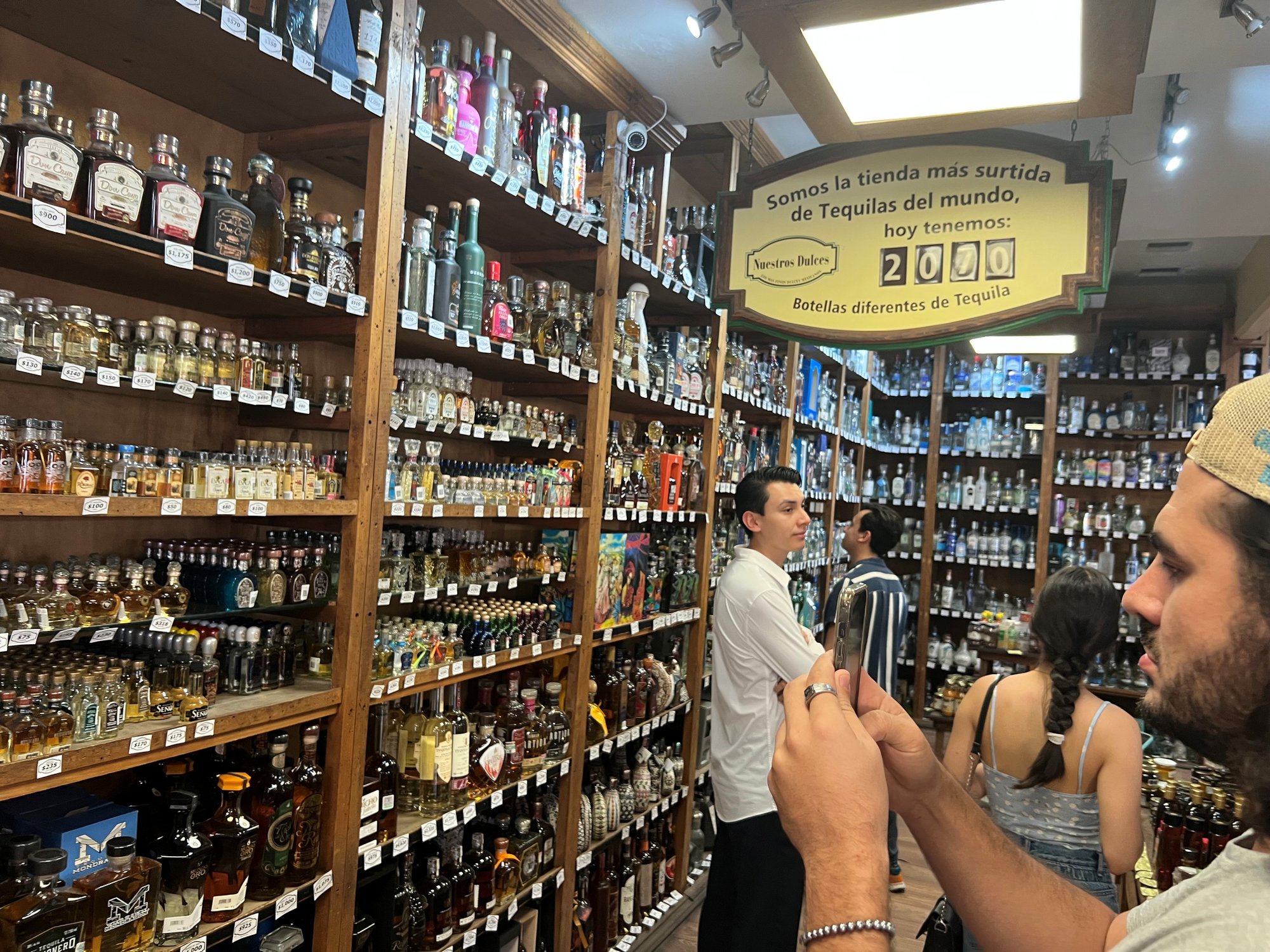
A decade ago, agave's place in the global spirits market was largely defined by tequila. That has changed considerably. Agave spirits and wine now occupy a much broader space in the international beverage trade, driven by shifts in consumer behavior, category innovation, and expanding geographic demand.
The forces behind that growth are structural, not cyclical. Producers and buyers who understand what is driving the category can make better decisions about where to invest and how to position their products in a rapidly evolving global market.
A Consumer Base That Has Matured Beyond Tequila
The consumer relationship with agave flavor has deepened over the past several years. Tequila introduced agave to mainstream audiences. But familiarity with the flavor profile has created an appetite for more varied expressions. Consumers who started with a basic blanco margarita are now exploring añejo expressions, agave-based cocktails, and fermented agave products that sit entirely outside the tequila category.
That maturation is visible in on-premise ordering behavior. Agave spirits appear more frequently in cocktail menus outside of Mexican-themed venues. Bars and restaurants in major metropolitan markets are featuring agave wine as a standalone pour and as a cocktail component. The ingredient is finding its way into drinking occasions where it had no presence five years ago.

This broadening consumer familiarity creates a favorable environment for category expansion. Producers introducing new agave-based products are not educating consumers from zero. They are offering something adjacent to flavors and experiences that their target audience already knows and trusts.
Premiumization as a Global Market Driver
Premiumization has reshaped alcohol consumption patterns across every major market. Consumers in the United States, Europe, and increasingly in Asia-Pacific are drinking less overall but spending more per occasion. That shift rewards producers with authentic provenance stories, artisanal production credentials, and ingredient transparency.
Agave spirits and wine carry all of those attributes naturally. The ingredient originates from a specific plant, grown in specific volcanic soils, harvested on multi-year cycles that cannot be rushed. That production reality generates a provenance story that resonates with premium consumers. Bottles and cans that communicate genuine agave origin, production method, and certification status command higher price points in the premium and super-premium tiers where volume growth is concentrated.
The rising global opportunity for agave spirits in bulk trade reflects this dynamic directly. International buyers are not just sourcing commodity spirit. They are sourcing ingredients with verified provenance and consistent quality that supports premium product positioning in their home markets. That demand creates a more sustainable commercial relationship than price-driven commodity purchasing.
The RTD Category as an International Growth Engine
Ready-to-drink beverage alcohol has become one of the fastest-growing formats in global spirits trade. The RTD category's growth is not confined to the United States. European markets, particularly the United Kingdom, Germany, and the Nordic countries, have seen significant RTD expansion. Australian and Japanese markets have also shown strong adoption.
Agave-forward RTD products are well-positioned within that global expansion. Margarita-style formats translate across markets with minimal localization. The flavor profile is widely understood. The lower ABV of agave wine-based RTD formats aligns with the moderation trends that are driving volume growth in many international markets.
For producers and distributors entering new international markets with agave-based RTDs, the category growth provides a commercial tailwind. The market is building consumer awareness and distribution infrastructure simultaneously. Brands entering now benefit from that infrastructure development rather than having to create it independently.
Sustainability as a Purchase Criterion in Global Trade
Environmental responsibility has moved from a brand differentiator to a baseline expectation in many export markets. European buyers in particular apply sustainability criteria to ingredient sourcing decisions. Certification to organic standards, documentation of agricultural practices, and credible environmental claims are increasingly required for access to premium retail and foodservice channels.
Agave's production profile aligns well with these expectations. The crop requires no synthetic fertilizers. It does not demand tilling or irrigation at commercial scale. It grows on land unsuitable for most other crops. When processed, the shredded piña material can fuel biomass energy systems, closing the waste loop at the production facility.
For international buyers sourcing agave spirits and wine for markets with strong sustainability requirements, these credentials reduce compliance friction and support premium positioning simultaneously. Sourcing from a supplier who can provide documented evidence of these practices, rather than general claims, is what buyers in regulated markets actually need.
The Role of Certification in Market Access
Certification requirements vary across global markets but consistently affect access at the retail and foodservice level. USDA Organic certification is table stakes for better-for-you positioning in the United States. EU Organic certification opens doors across European distribution channels.

Producers evaluating agave wine sourcing for international beverage applications consistently identify certification coverage as one of the most operationally significant supplier criteria. A supplier carrying the full range of relevant certifications eliminates the documentation burden that falls on the buyer when working with uncertified sources. That administrative simplification has direct commercial value, particularly for brands managing multiple markets simultaneously.
Geographic Demand Expansion Beyond Traditional Markets
Tequila's growth in international markets has seeded consumer awareness of agave flavor in regions that had limited prior exposure. The United Kingdom, Australia, Japan, and several Western European markets have all seen meaningful tequila volume growth over the past five years. That growth creates a foundation for broader agave spirit and wine category expansion in those same markets.
Distributors in emerging agave markets are actively seeking supply relationships that give them access to a range of agave products rather than a single SKU. Suppliers who can offer agave spirits, agave wine, and agave-based ingredients from a single vertically integrated source present a simpler, more attractive commercial proposition than those requiring multiple sourcing relationships for different product types.
How The Tierra Group Supports Global Agave Spirits and Wine Trade
The Tierra Group produces a full range of agave products at our vertically integrated facility in Capilla de Guadalupe, Mexico. Our portfolio includes 100% Blue Agave Spirits, Agave Mixto, 100% Blue Agave Tequila, Tequila Mixto, and Bluava® Agave Wine.
We work with distributors, RTD producers, and private label brands building agave portfolios for domestic and export markets. Start building your global agave sourcing relationship with our team today. Contact us today.